


Are Curved Flap Discs more expensive than other grinding discs?
In the realm of industrial grinding and surface preparation, the choice of grinding discs can significantly impact both the quality of work and the overall cost. As a supplier of curved flap discs, I often encounter inquiries regarding the pricing of these specialized products compared to other types of grinding discs. In this blog post, I will delve into the factors that influence the cost of curved flap discs and compare them with other common grinding discs to determine whether they are indeed more expensive.
Understanding Curved Flap Discs
Curved flap discs are a type of abrasive tool designed for grinding, blending, and finishing various materials, including metal, stainless steel, and non - ferrous metals. They consist of multiple overlapping abrasive flaps arranged in a curved shape around a central hub. This unique design provides several advantages over traditional flat flap discs and other grinding discs. The curved shape allows for better contact with the workpiece, especially on curved or irregular surfaces, resulting in more efficient material removal and a smoother finish.
Factors Affecting the Cost of Grinding Discs
Before comparing the prices of curved flap discs with other grinding discs, it is essential to understand the factors that contribute to the cost of these products.
Abrasive Material
The type of abrasive material used in a grinding disc is one of the primary factors influencing its price. Common abrasive materials include aluminum oxide, silicon carbide, and zirconia alumina. Zirconia alumina, for example, is a high - performance abrasive known for its durability and long - lasting cutting ability. Grinding discs made with zirconia alumina, such as the Zirconia Flap Disc, tend to be more expensive than those made with aluminum oxide or silicon carbide due to the higher cost of the raw material and the advanced manufacturing processes required.

Manufacturing Process
The manufacturing process of a grinding disc also affects its cost. Curved flap discs, in particular, require more complex manufacturing techniques compared to flat flap discs or other simple grinding discs. The process of shaping the abrasive flaps into a curved form and assembling them onto the hub requires precision and specialized equipment. This additional complexity in manufacturing can increase the production cost, which is then reflected in the price of the product.
Size and Specification
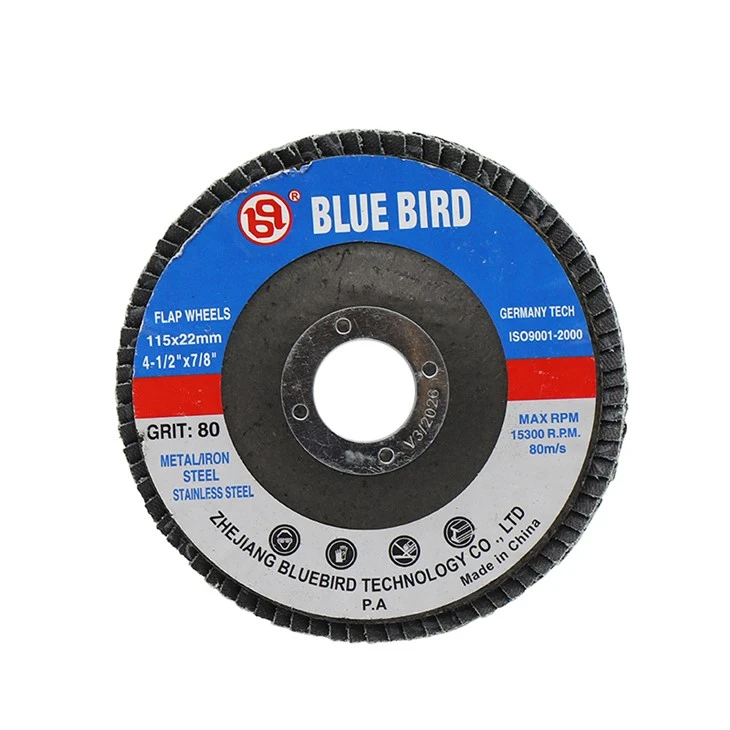
The size and specification of a grinding disc play a significant role in determining its price. Larger grinding discs generally cost more than smaller ones because they require more abrasive material and a larger backing plate. Additionally, discs with specific specifications, such as a higher grit count or a particular shape, may also be more expensive. For instance, the 4 1 2 Flap Disc and the 115mm Flap Disc may have different prices based on their size and the intended application.
Comparison with Other Grinding Discs
Now, let's compare the cost of curved flap discs with other common types of grinding discs.
Flat Flap Discs
Flat flap discs are one of the most widely used grinding discs in the industry. They are relatively simple in design and are available in a wide range of sizes and abrasive materials. In general, flat flap discs are less expensive than curved flap discs. This is mainly because the manufacturing process of flat flap discs is less complex, and they do not require the specialized equipment needed to produce the curved shape. However, it is important to note that the performance of flat flap discs may be limited when working on curved or irregular surfaces, where curved flap discs excel.
Grinding Wheels
Grinding wheels are another popular choice for grinding applications. They are available in various types, including straight wheels, cup wheels, and cylinder wheels. The cost of grinding wheels can vary widely depending on their size, abrasive material, and bond type. In some cases, grinding wheels may be less expensive than curved flap discs, especially for large - scale grinding operations where the volume of material removal is high. However, grinding wheels may not provide the same level of precision and finishing as curved flap discs, especially when working on detailed or contoured surfaces.
Cut - Off Wheels
Cut - off wheels are designed specifically for cutting through materials such as metal, stone, and concrete. They are typically thinner and more brittle than grinding discs. Cut - off wheels are generally less expensive than curved flap discs because they are simpler in design and are used for a more specific purpose. However, they are not suitable for grinding or finishing applications, which are the primary functions of curved flap discs.
Value for Money
While curved flap discs may be more expensive than some other types of grinding discs, it is important to consider the value they offer. The unique design of curved flap discs allows for more efficient material removal, better control, and a superior finish. This can result in time savings, reduced labor costs, and improved quality of work. In many cases, the additional cost of curved flap discs can be offset by the increased productivity and better results they provide.
For example, in industries such as automotive manufacturing, aerospace, and metal fabrication, where precision and quality are of utmost importance, the use of curved flap discs can lead to significant benefits. The ability to work on curved and irregular surfaces with ease can reduce the need for additional finishing steps, which can save both time and money in the long run.
Conclusion
In conclusion, curved flap discs are generally more expensive than some other types of grinding discs due to factors such as the type of abrasive material, the complexity of the manufacturing process, and the specific design requirements. However, the additional cost is often justified by the superior performance and value they offer, especially when working on curved or irregular surfaces.
If you are in the market for high - quality grinding discs and are considering the use of curved flap discs, I encourage you to contact us for more information. We can provide you with detailed product specifications, pricing, and technical support to help you make an informed decision. Whether you are a small - scale workshop or a large - scale industrial manufacturer, we have the expertise and products to meet your grinding needs. Reach out to us to start a discussion about your requirements and explore how our curved flap discs can enhance your operations.
References
- "Industrial Abrasives Handbook", Second Edition, William L. Hustrulid, Jr., and William W. Ruff
- "Abrasive Technology: Principles and Applications", Ramesh Singh


