


When it comes to crafting wooden musical instruments, the choice of tools is crucial. As a supplier of flap discs for wood, I often receive inquiries about whether flap discs can be used on wooden musical instruments. In this blog, I'll delve into this question, exploring the potential uses, benefits, and considerations of using flap discs for wood in the context of musical instrument making.
Understanding Flap Discs for Wood
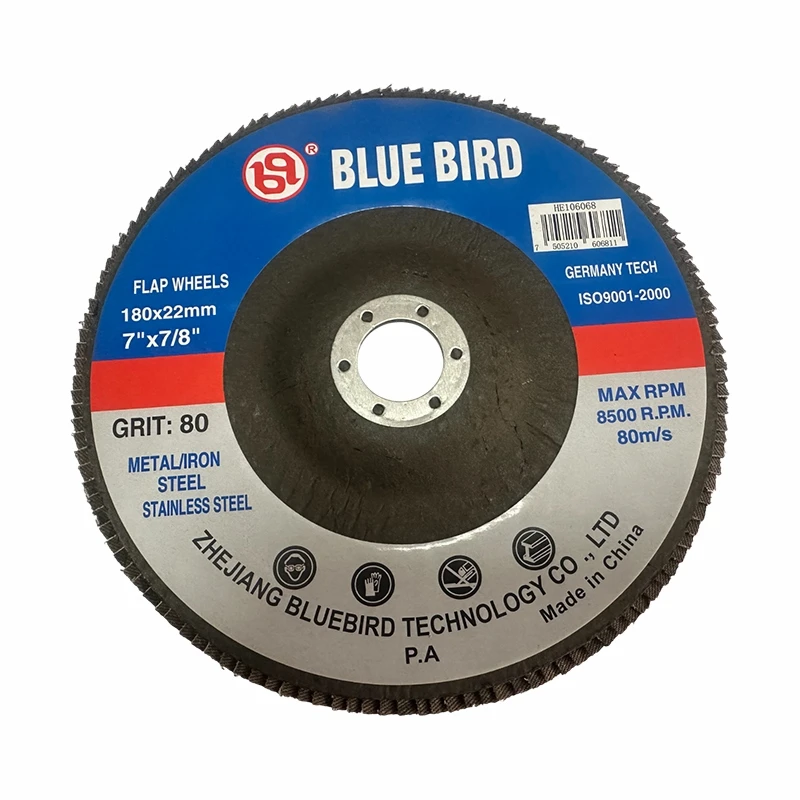
Flap discs are abrasive tools composed of multiple overlapping abrasive flaps attached to a backing plate. They are commonly used for grinding, blending, and finishing various materials, including wood. The abrasive flaps are typically made of materials such as aluminum oxide or silicon carbide, which provide different levels of cutting aggressiveness and finish quality.
As a supplier, I offer a range of flap discs for wood, including 9 Inch Flap Disc, 60 Grit Flap Disc, and 7 Inch Flap Disc. These flap discs come in different sizes and grits to suit various applications and user preferences.
Potential Uses of Flap Discs on Wooden Musical Instruments
- Shaping and Contouring: Flap discs can be used to shape and contour the body, neck, and other components of wooden musical instruments. For example, when crafting a guitar body, a flap disc can be used to smooth out rough edges, create curves, and refine the overall shape. The flexibility of the abrasive flaps allows for precise control and smooth transitions, resulting in a more professional-looking finish.
- Sanding and Smoothing: Flap discs are effective for sanding and smoothing the surface of wooden musical instruments. They can remove rough spots, scratches, and unevenness, leaving a smooth and uniform finish. The different grits available allow for progressive sanding, starting with a coarser grit to remove material quickly and finishing with a finer grit for a polished look.
- Blending and Feathering: In some cases, flap discs can be used to blend and feather the edges of joints or repairs on wooden musical instruments. This helps to create a seamless transition between different parts of the instrument, improving its aesthetic appeal and structural integrity.
Benefits of Using Flap Discs for Wood on Wooden Musical Instruments
- Efficiency: Flap discs are designed to remove material quickly and efficiently. Compared to traditional sanding methods, such as using sandpaper by hand, flap discs can save a significant amount of time and effort, especially when working on large or complex surfaces.
- Consistency: The overlapping abrasive flaps on a flap disc ensure a consistent and even finish. This is particularly important when working on wooden musical instruments, where a uniform surface is essential for both aesthetic and acoustic reasons.
- Versatility: Flap discs can be used on a variety of wood types, including hardwoods and softwoods. They can also be used on different parts of the instrument, such as the body, neck, and fretboard. This versatility makes them a valuable tool for musical instrument makers.
Considerations When Using Flap Discs on Wooden Musical Instruments
- Grit Selection: Choosing the right grit of flap disc is crucial to achieving the desired finish. A coarser grit (e.g., 40 or 60 grit) is suitable for removing material quickly and shaping the wood, while a finer grit (e.g., 120 or 220 grit) is better for sanding and smoothing the surface. It's important to start with a coarser grit and gradually work your way up to a finer grit for a smooth and polished finish.
- Speed and Pressure: When using a flap disc on a wooden musical instrument, it's important to use the right speed and pressure. Too much speed or pressure can cause the wood to burn or damage the surface, while too little speed or pressure may result in inefficient material removal. It's recommended to start with a low speed and gradually increase it as needed, while applying light pressure to avoid overheating the wood.
- Dust Collection: Working with flap discs on wood generates a significant amount of dust, which can be harmful to your health if inhaled. It's important to use a dust collection system or wear a dust mask to protect yourself from the dust. Additionally, regular cleaning of the work area and the flap disc itself is necessary to prevent the buildup of dust and debris.
- Surface Protection: To prevent damage to the surface of the wooden musical instrument, it's recommended to use a backing pad or a soft cloth between the flap disc and the wood. This helps to distribute the pressure evenly and reduces the risk of scratching or marring the surface.
Conclusion
In conclusion, flap discs for wood can be a valuable tool for crafting wooden musical instruments. They offer a range of benefits, including efficiency, consistency, and versatility, and can be used for shaping, sanding, and finishing various parts of the instrument. However, it's important to use the right grit, speed, and pressure, and to take appropriate safety precautions when using flap discs on wooden musical instruments.

As a supplier of flap discs for wood, I'm committed to providing high-quality products and excellent customer service. If you're interested in using flap discs for your wooden musical instrument projects, I encourage you to contact me to discuss your specific needs and requirements. I'll be happy to help you choose the right flap discs and provide you with any technical support or advice you may need.
References
- Woodworking Magazine. (Year). "Best Tools for Crafting Wooden Musical Instruments."
- Musical Instrument Making Handbook. (Year). "Techniques for Shaping and Finishing Wood."


