


Hey there! As a supplier of metal flap discs, I've seen firsthand how the quality of these tools can make or break their performance. In this blog, I'm gonna dive deep into how different aspects of a metal flap disc's quality impact how well it works.
Let's start with the abrasive material. The type of abrasive used in a metal flap disc is crucial. High - quality flap discs usually use premium abrasives like aluminum oxide or zirconia alumina. Aluminum oxide is known for its versatility and long - lasting cutting ability. It can handle a wide range of metals, from mild steel to stainless steel. When you're using a flap disc with top - notch aluminum oxide, you'll notice a smooth and consistent cut. It doesn't clog up easily, which means you can keep working for longer periods without having to stop and clean the disc.
On the other hand, zirconia alumina is even more aggressive. It's great for heavy - duty applications where you need to remove a large amount of material quickly. For example, if you're working on a thick steel plate and you need to grind down a weld, a zirconia alumina flap disc will get the job done much faster than a lower - quality alternative. Cheaper flap discs might use inferior abrasives that wear out quickly. These discs will lose their cutting edge in no time, and you'll find yourself replacing them frequently. This not only costs you more money in the long run but also slows down your work.
The backing material is another key factor. A good backing material provides stability and support to the abrasive flaps. High - quality metal flap discs often use a strong and flexible backing. This allows the disc to conform to the shape of the workpiece while still maintaining its integrity. For instance, when you're grinding a curved surface, a flap disc with a quality backing will follow the curve smoothly, giving you an even finish.
If the backing is too weak, the flaps can start to separate or fall off during use. This is not only dangerous but also ruins the performance of the disc. You won't be able to achieve a consistent grind, and you might end up with an uneven surface on your workpiece. Some low - quality flap discs use thin or brittle backing materials that are prone to cracking. Once the backing cracks, the whole disc becomes useless.
Now, let's talk about the construction of the flaps. In a high - quality metal flap disc, the flaps are evenly spaced and firmly attached to the backing. This ensures that the abrasive material is distributed evenly across the disc. When you're grinding, an evenly - constructed flap disc will provide a uniform cutting action. You won't have areas where the disc is cutting too aggressively while other areas are barely doing anything.
In contrast, poorly - constructed flap discs may have flaps that are unevenly spaced or not attached properly. These discs can cause uneven wear, and they might even vibrate during use. Vibration not only makes the grinding process uncomfortable but also affects the quality of the finish. You might end up with a wavy or rough surface on your workpiece.
The bond that holds the abrasive grains to the flaps is also important. A strong bond keeps the grains in place during grinding. High - quality flap discs use a bond that can withstand the heat and pressure generated during the grinding process. This means that the abrasive grains don't fall off prematurely, and the disc maintains its cutting performance for longer.
Weak bonds, on the other hand, allow the abrasive grains to come loose easily. As a result, the disc becomes less effective at cutting, and you'll have to replace it sooner. You might also notice that when the grains come off, they can get embedded in the workpiece, causing scratches and other surface defects.
The size and shape of the metal flap disc also play a role in its performance. For example, a Curved Flap Disc is designed specifically for working on curved surfaces. Its curved shape allows it to follow the contours of the workpiece more easily, providing a better finish. If you try to use a flat flap disc on a curved surface, you'll find it difficult to get an even grind.
Similarly, the 4 1 2 Flap Disc and 115mm Flap Disc are popular sizes for different applications. The 4 1/2 - inch size is commonly used in handheld grinders and is great for general - purpose grinding. The 115mm size is also versatile and can be used in a variety of grinding tasks. Using the right size and shape of flap disc for your specific job is essential for achieving the best performance.
In addition to the physical characteristics, the quality control during the manufacturing process also affects the performance of a metal flap disc. Reputable suppliers have strict quality control measures in place. They test each batch of flap discs to ensure that they meet certain standards. This includes checking the hardness of the abrasive, the strength of the backing, and the uniformity of the flaps.
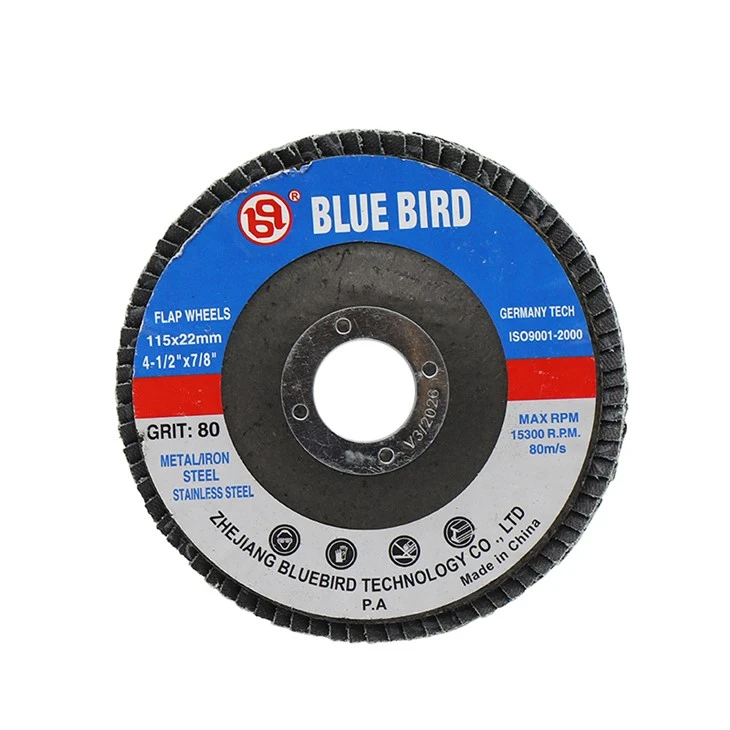

When you buy from a supplier with good quality control, you can be confident that the flap discs you're getting are reliable. You won't have to worry about getting a defective disc that fails to perform. On the other hand, if you buy from a supplier with poor quality control, you might end up with a batch of sub - standard flap discs that don't work as expected.
To sum it up, the quality of a metal flap disc has a huge impact on its performance. From the abrasive material and backing to the construction of the flaps and the manufacturing quality control, every aspect matters. If you want to get the most out of your grinding work, it's worth investing in high - quality metal flap discs.
If you're in the market for metal flap discs and you're looking for a reliable supplier, I'd love to have a chat with you. Whether you need a specific size, shape, or type of flap disc, I can help you find the right product for your needs. Just reach out, and we can start the conversation about how I can supply you with top - notch metal flap discs.
References
- "Handbook of Abrasive Technology" by John C. Richardson
- "Grinding and Finishing" by Peter K. Wright


