


Hey there! As a supplier of metal cutting discs, I've seen firsthand how the type of metal can have a huge impact on the performance of these discs. So, I thought I'd share some insights with you all today.
Let's start with the basics. Metal cutting discs are used to cut through various types of metals, and different metals have different properties that can affect how well a cutting disc works. For example, some metals are harder, some are softer, some are more brittle, and some are more ductile. These properties determine how the cutting disc interacts with the metal during the cutting process.
Hardness of the Metal
One of the most important factors is the hardness of the metal. Harder metals, like stainless steel or high - carbon steel, require a cutting disc that can withstand the high forces and abrasion. When you're trying to cut through a hard metal, the cutting disc needs to be tough enough not to wear out too quickly. A disc that's too soft will just get dull in no time and won't be able to make a clean cut.

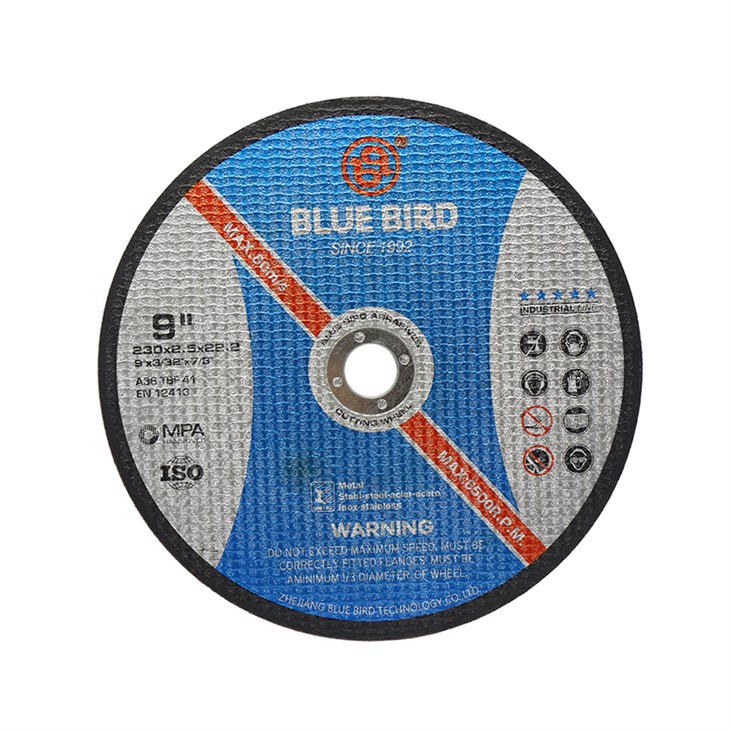
On the other hand, softer metals such as aluminum or copper are easier to cut. But that doesn't mean you can use just any cutting disc. A disc that's too aggressive for a soft metal can cause the metal to melt or deform. You need a disc that can make a smooth cut without causing excessive heat buildup.
For cutting hard metals, I'd recommend checking out our Metal Cutting Disc for Chop Saw. These discs are designed to handle the high - stress cutting of hard materials. They have a special abrasive composition that can stay sharp for longer and make precise cuts.
Brittleness and Ductility
Brittle metals, like cast iron, break easily under stress. When using a cutting disc on a brittle metal, you have to be careful not to apply too much pressure. If you do, the metal might crack or shatter. A good cutting disc for brittle metals should be able to make a controlled cut without causing the metal to break apart.
Ductile metals, such as mild steel, can be stretched and bent without breaking. When cutting ductile metals, the cutting disc needs to be able to cut through the metal smoothly without getting clogged. A clogged disc will slow down the cutting process and can even cause the disc to overheat. Our Abrasive Metal Cutting Disc is great for ductile metals. It has a self - sharpening feature that helps keep the cutting edge clean and efficient.
Heat Resistance
Another important aspect is heat resistance. During the cutting process, a lot of heat is generated. Some metals, like titanium, have a low thermal conductivity, which means they don't dissipate heat well. This can cause the cutting disc to overheat quickly. An overheated disc can lose its shape, become less effective, and even pose a safety risk.
A heat - resistant cutting disc is essential when dealing with metals that don't handle heat well. Our Angle Grinder Metal Cutting Disc is designed with heat - resistant materials. It can withstand high temperatures and maintain its cutting performance even when cutting metals that generate a lot of heat.
Chemical Composition of the Metal
The chemical composition of the metal also plays a role. Some metals contain elements that can react with the abrasive material of the cutting disc. For example, some metals might have sulfur or phosphorus in them, which can cause the abrasive grains to wear out faster. A cutting disc that's resistant to chemical reactions is needed in such cases.
We've done a lot of research and development to create cutting discs that can handle different chemical compositions of metals. Our discs are formulated to be as resistant as possible to chemical wear, ensuring a longer lifespan and better cutting performance.
Thickness of the Metal
The thickness of the metal being cut is another factor. Thicker metals require a cutting disc with more cutting power. A thin - gauge cutting disc might not be able to cut through a thick piece of metal effectively. You need a disc with a larger diameter and a more powerful abrasive to make a clean cut through thick metals.
For thin metals, a thinner and more flexible cutting disc can be used. This type of disc can make precise cuts without causing too much damage to the surrounding area.
Cost - Efficiency
When it comes to choosing a cutting disc, cost - efficiency is also a consideration. You might think that a cheaper cutting disc is a good deal, but if it wears out quickly and doesn't make a good cut, it's actually more expensive in the long run. Our cutting discs are designed to offer a good balance between cost and performance. They last longer, make cleaner cuts, and save you money in the long term.
Safety
Safety is always a top priority when using cutting discs. Different metals can present different safety risks. For example, cutting some metals can produce toxic fumes. You need to make sure you're using the right cutting disc in a well - ventilated area. Also, a cutting disc that's not suitable for a particular metal can break or shatter, which is extremely dangerous.
We provide safety guidelines with all our cutting discs and make sure they meet the highest safety standards. Our discs are tested rigorously to ensure they won't break or malfunction during use.
In conclusion, the type of metal has a significant impact on the performance of a cutting disc. Whether it's the hardness, brittleness, heat resistance, chemical composition, thickness, or cost - efficiency, all these factors need to be considered when choosing the right cutting disc for your project.
If you're in the market for high - quality metal cutting discs, we've got you covered. We have a wide range of cutting discs suitable for different types of metals and cutting applications. Don't hesitate to reach out to us for more information or to discuss your specific needs. We're always happy to help you find the perfect cutting disc for your job.
References
- "Handbook of Abrasive Technology"
- "Metal Cutting Principles and Applications"
- Industry research reports on metal cutting discs


