


When it comes to using a flap disc wheel on titanium, there are several special considerations that both professionals and hobbyists need to keep in mind. As a flap disc wheel supplier, I've witnessed firsthand the unique challenges and requirements associated with working on this remarkable metal. In this blog post, I'll delve into the key factors that should be taken into account to ensure a successful and efficient operation when using a flap disc wheel on titanium.
Understanding Titanium's Properties
Titanium is a metal renowned for its exceptional strength - to - weight ratio, corrosion resistance, and high melting point. These properties make it a popular choice in industries such as aerospace, medical, and marine. However, these very characteristics also pose challenges when it comes to machining and finishing.
One of the most significant properties of titanium is its low thermal conductivity. When a flap disc wheel is used on titanium, the heat generated during the grinding or finishing process doesn't dissipate easily. This can lead to a buildup of heat at the contact point between the flap disc and the titanium surface. Excessive heat can cause the titanium to harden, distort, or even develop micro - cracks, which can compromise the integrity of the workpiece.
Selecting the Right Flap Disc Wheel
Grit Size
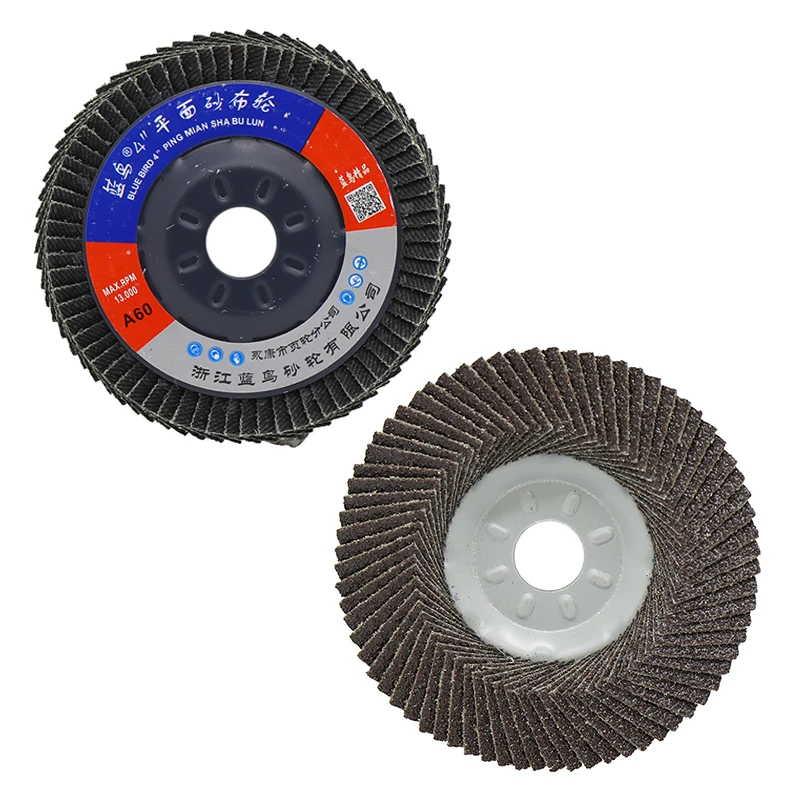
The grit size of a flap disc is crucial when working on titanium. A finer grit will generally produce a smoother finish, but it may not be efficient for removing large amounts of material. For rough grinding or initial material removal, a coarser grit such as 60 Grit Flap Disc can be a good choice. It allows for faster stock removal, but care must be taken to avoid over - heating the titanium.
As the work progresses towards a more refined finish, switching to a finer grit flap disc can help achieve the desired surface quality. For example, a 100 - or 120 - grit flap disc can be used for intermediate grinding, followed by an even finer grit for the final finish.
Size and Shape
The size of the flap disc also matters. A 100mm Flap Disc is a common choice for many applications, as it provides a good balance between coverage and maneuverability. Smaller flap discs may be more suitable for working on intricate or hard - to - reach areas, while larger ones can cover more surface area quickly.
In terms of shape, a flat - faced flap disc is ideal for general grinding and finishing on flat surfaces. However, if the titanium workpiece has curved or contoured surfaces, a Flexible Flap Disc can conform better to the shape, ensuring an even finish.
Abrasive Material
The abrasive material used in the flap disc is another important consideration. Aluminum oxide is a common abrasive, but for titanium, zirconia alumina or ceramic abrasives may be more suitable. These abrasives are more heat - resistant and can maintain their cutting edge better when working on titanium. They also tend to break down in a way that exposes fresh cutting edges, prolonging the life of the flap disc.
Operating Techniques
Speed and Pressure
When using a flap disc wheel on titanium, it's essential to control the speed of the grinder and the pressure applied. High speeds can generate excessive heat, so it's recommended to use a grinder with variable speed settings and keep the speed relatively low. A speed of around 5,000 - 8,000 RPM is often a good starting point, but this may need to be adjusted based on the specific grinder and flap disc being used.
Applying too much pressure can also cause over - heating. Instead, use a light, consistent pressure and let the abrasive do the work. This helps to prevent the flap disc from clogging with titanium chips and reduces the risk of heat - related damage to the workpiece.
Cooling and Lubrication
To manage the heat generated during the grinding process, cooling and lubrication can be beneficial. Some operators use a coolant or lubricant specifically designed for titanium machining. This can help dissipate heat, reduce friction, and prevent the titanium chips from sticking to the flap disc. However, it's important to choose a coolant that is compatible with both the titanium and the abrasive material of the flap disc.
Angle of Attack
The angle at which the flap disc is held against the titanium surface can affect the grinding efficiency and the quality of the finish. A shallow angle of around 15 - 30 degrees is generally recommended. This allows the abrasive flaps to make good contact with the surface and reduces the likelihood of gouging or uneven grinding.
Safety Precautions
Working with titanium and flap disc wheels requires strict safety precautions. Titanium dust is highly flammable and can pose an explosion hazard if it accumulates in the air. Therefore, proper ventilation is essential to remove the dust generated during the grinding process. A dust collection system or a well - ventilated workspace can help minimize the risk.
Wearing appropriate personal protective equipment (PPE) is also crucial. This includes safety glasses, a face shield, gloves, and a respirator to protect against inhaling the fine titanium dust.
Maintenance of Flap Disc Wheels
Regular maintenance of the flap disc wheels can improve their performance and longevity. After each use, it's important to clean the flap disc to remove any titanium chips or debris that may have accumulated. This can be done by gently tapping the flap disc or using a brush to dislodge the particles.
Inspecting the flap disc for signs of wear or damage is also necessary. If the flaps are worn down or damaged, the flap disc should be replaced immediately. Using a worn - out flap disc can lead to poor finishing results and may increase the risk of accidents.
Cost - Benefit Analysis
When using flap disc wheels on titanium, it's important to consider the cost - benefit ratio. Higher - quality flap discs made from premium abrasive materials may be more expensive initially, but they often offer better performance and longer service life. They can also reduce the overall time and cost associated with the finishing process by providing a more efficient and consistent finish.

In conclusion, using a flap disc wheel on titanium requires careful consideration of various factors, from the selection of the right flap disc to the implementation of proper operating techniques and safety measures. By taking these special considerations into account, users can achieve high - quality finishes on titanium workpieces while ensuring the safety of the operators and the integrity of the equipment.
If you're in the market for flap disc wheels for titanium applications, I encourage you to reach out to discuss your specific needs. Our team of experts can help you select the most suitable products and provide valuable advice on using them effectively.
References
- "Titanium: Properties, Processing, and Applications" by ASM International
- "Abrasive Machining Technology" by J. Paulo Davim


