


A curved flap disc is a versatile and efficient grinding tool widely used in various industries, especially in metalworking. As a supplier of Curved Flap Disc, I often receive inquiries about its working principle. In this blog, I will delve into the science behind how a curved flap disc operates and why it is such a popular choice for many professionals.
Structure of a Curved Flap Disc
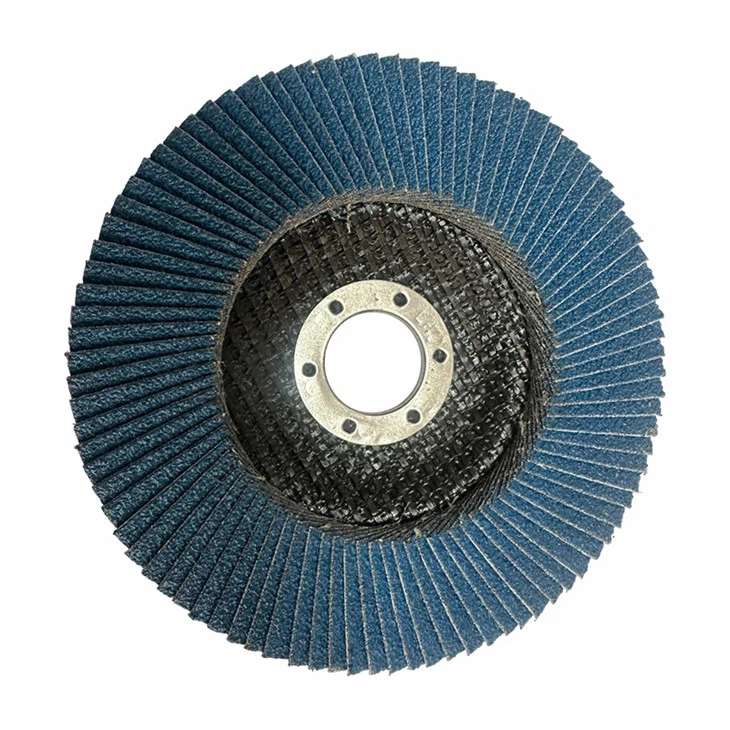
Before we discuss the working principle, it's essential to understand the structure of a curved flap disc. A typical curved flap disc consists of multiple abrasive flaps that are radially arranged around a central hub. These flaps are usually made of abrasive grains bonded to a flexible backing material, such as cloth or paper. The abrasive grains can vary in type, including aluminum oxide, silicon carbide, and ceramic. The choice of abrasive grain depends on the specific application and the material being worked on.
The curved shape of the flap disc is one of its defining features. This curvature allows the disc to conform to the shape of the workpiece, providing better contact and more efficient grinding. The flaps are designed to flex and adapt to the surface, ensuring a consistent and uniform grinding action.
Working Principle
The working principle of a curved flap disc is based on the interaction between the abrasive grains and the workpiece. When the disc is rotated at high speed, the abrasive grains on the flaps come into contact with the surface of the workpiece. As the grains rub against the material, they remove small particles through a process called abrasion.
Abrasion Process
Abrasion occurs when the hard abrasive grains scratch and cut into the softer workpiece material. The cutting action of the grains is similar to that of a saw blade, but on a much smaller scale. As the disc rotates, the flaps continuously expose fresh abrasive grains to the workpiece, maintaining a sharp cutting edge.
The pressure applied to the disc also plays a crucial role in the abrasion process. When the operator presses the disc against the workpiece, the abrasive grains are forced into the material, increasing the cutting force. However, excessive pressure can cause the flaps to wear out more quickly and may also lead to overheating of the workpiece. Therefore, it's important to apply the right amount of pressure to achieve optimal results.
Flap Flexibility
The flexibility of the flaps is another key factor in the working principle of a curved flap disc. As the disc rotates, the flaps flex and adapt to the surface of the workpiece. This flexibility allows the disc to conform to irregular shapes and contours, providing a smooth and even finish.
The flaps also help to dissipate heat generated during the grinding process. When the abrasive grains cut into the workpiece, friction is produced, which can cause the temperature of the disc and the workpiece to rise. The flexible flaps act as a heat sink, transferring the heat away from the cutting area and preventing overheating.

Self-Sharpening Action
One of the advantages of a curved flap disc is its self-sharpening action. As the abrasive grains wear down during use, the outer layer of the flaps is gradually removed, exposing fresh grains underneath. This self-sharpening mechanism ensures that the disc maintains a consistent cutting performance throughout its lifespan.
The self-sharpening action also helps to extend the life of the disc. Unlike traditional grinding wheels, which can become dull and ineffective over time, a curved flap disc can continue to provide efficient grinding for a longer period.
Applications
Curved flap discs are used in a wide range of applications, including:
- Metalworking: Curved flap discs are commonly used in metal fabrication shops for grinding, deburring, and finishing metal parts. They can be used on various types of metals, including steel, aluminum, and stainless steel.
- Automotive Industry: In the automotive industry, curved flap discs are used for surface preparation, paint removal, and bodywork repair. They are ideal for working on curved and contoured surfaces, such as car fenders and hoods.
- Welding: After welding, curved flap discs can be used to smooth out the weld beads and remove any excess material. They help to create a clean and professional-looking weld joint.
- Construction: In the construction industry, curved flap discs are used for grinding and finishing concrete, stone, and other building materials. They can be used to remove rough edges, smooth surfaces, and prepare the material for further processing.
Comparison with Other Grinding Tools
Compared to other grinding tools, such as grinding wheels and sanding discs, curved flap discs offer several advantages:
- Versatility: Curved flap discs can be used on a variety of materials and surfaces, making them a versatile choice for many applications.
- Efficiency: The self-sharpening action of the flaps ensures a consistent cutting performance, resulting in faster and more efficient grinding.
- Finish Quality: The flexible flaps of a curved flap disc provide a smooth and uniform finish, reducing the need for additional finishing operations.
- Safety: The design of the curved flap disc reduces the risk of kickback and other safety hazards, making it a safer option for operators.
Conclusion
In conclusion, the working principle of a curved flap disc is based on the interaction between the abrasive grains and the workpiece. The curved shape, flexible flaps, and self-sharpening action of the disc all contribute to its efficient and effective grinding performance. As a Curved Flap Disc supplier, I am proud to offer high-quality products that meet the needs of our customers.
If you are looking for a reliable and efficient grinding solution, I encourage you to consider using a curved flap disc. Our range of Curved Flap Disc products is designed to provide superior performance and durability. Whether you are working on a small DIY project or a large industrial application, we have the right disc for you.
If you have any questions or would like to discuss your specific requirements, please don't hesitate to contact us. We are always happy to help and look forward to the opportunity to work with you.
References
- "Abrasive Technology Handbook" by John C. Lancaster
- "Grinding and Finishing" by M. C. Shaw


